with Farmington High School Chamber Choir Louise Carrozza, Conductor
SAINT-SAENS: Cello Concerto No. 1
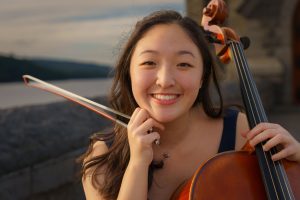
Lillian Yim, FHS Alum, soloist
The FVSO opens its 46th season with an all-French program. It features the magical chaos of Dukas’s The Sorcerer’s Apprentice (famous from Disney’s Fantasia) and the lively, elegant dances from Gounod’s opera Faust. The second half of the program opens with the hauntingly beautiful Pavane by Faure featuring the Farmington High School Chamber Choir, last heard with the orchestra two years ago for Vivaldi’s Gloria. The program concludes with the thrilling Saint-Saëns Cello Concerto No. 1 with FHS alumna, Lillian Yim.
Cellist Lillian Yim, 24, is a versatile musician striving to instill a love for music to her audiences. Lillian discovered her passion for music with Katie Kennedy at the Hartt School in Connecticut, where she began performing in orchestras and chamber ensembles. She was awarded the principal cello position of the Connecticut Youth Symphony as one of the youngest members in the orchestra. Ever since then, Lillian became an avid orchestral musician and has performed with the Boston Symphony Orchestra, Tanglewood Music Center Orchestra, and the New York String Orchestra Seminar.
Chamber music is a valuable part of Lillian’s career. She was the cellist in Trio Tyche, the New England Conservatory’s 2023-2024 Honors Piano Trio, and had the opportunity to perform a recital in Jordan Hall as well as present outreach concerts to the greater Boston community. Her love for chamber music has taken her to the Taos School of Music in New Mexico and Norfolk’s Chamber Music Festival in Connecticut, where she had the opportunity to work with members of the Brentano, Borromeo, Jupiter, Shanghai, and Ying quartets.
Lillian made her debut as soloist at age 17 where she performed with the Farmington Valley Symphony Orchestra (FVSO) as the winner of the Hartford Music Teachers Alliance Concerto Competition. She was invited back in 2020 to perform the entire Elgar Cello Concerto as the second prize winner of the CT-ASTA Solo Competition, and in February 2025 to perform the entire Dvorak Cello Concerto with the FVSO. In May 2023, Lillian performed Tchaikovsky’s Rococo Variations with the Nutmeg Symphony Orchestra as the winner of their concerto competition.
Lillian earned her Bachelor of Music in Cello Performance at the New England Conservatory of Music under the tutelage of Yeesun Kim as a recipient of the Cornelia Lombard Scholarship and the Dean’s Scholarship. She earned her Master of Music from the Juilliard School with Clara Minhye Kim, and currently attends the Yale School of Music with Paul Watkins to pursue her MMA.
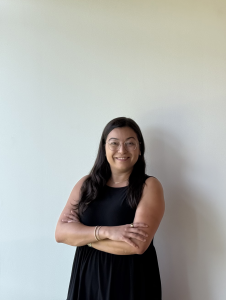
Louise Carrozza is the Choral Director at Farmington High School in Farmington, CT. At FHS, she directs five choral groups and also teaches Guitar I & II. She also serves as Music Director and Pit Orchestra Conductor for the Farmington Drama musical productions. Louise was recently named Farmington’s Teacher of the Year for the 2026-2027 school year. A dedicated leader in music education, Louise recently served three years as Chair of the CMEA Northern Region High School Mixed Choir, and two years as the Treble Choir Repertoire & Resources Chair for the CT Chapter of the American Choral Directors Association (ACDA). She frequently presents at state and regional conferences for both ACDA and the National Association for Music Education (NAfME). She has recently been called upon to conduct middle school honor choirs in Connecticut and New York. During the summer, she tours Europe as a Choral Director with American Music Abroad and co-teaches the Musical Theater workshop at YPI summer arts camp. Louise holds a B.S. in Music Education from Western Connecticut State University (2016) and an M.A. in Music and Music Education from Teachers College, Columbia University (2022).
Farmington High School Music Department
The Music Department at Farmington High School (FHS) is proud to serve over 400 students with opportunities to create, perform, and connect to the world around them through music. It has a strong ensemble program for band, orchestra, and choral students. The Farmington K-12 Music Department was recognized with a ‘Best Communities in Music Education’ Award in 2024. FHS has a rich choral tradition with several types of ensembles and opportunities to sing throughout grades 9-12. Chamber Singers is comprised of mainly juniors and seniors who have: spent at least 1 year in all other performing groups at the school for which they are eligible to join; passed an audition process which includes a high level of sight singing proficiency; demonstrated a commitment to development of vocal technique; and shows an ongoing passion for choral art. The Chamber Singers scored Platinum at Fantastic Festivals and earned First Place in the Mixed Choir division for the 2024 festival season. The Chamber Singers collaborate with community organizations and perform at events in the greater Farmington Valley throughout the year, and they traveled to Washington, DC in April of 2025 to perform throughout the nation’s capital.
Paul Abraham Dukas (1865 – 1935) French
The Sorcerer’s Apprentice (1897)
First Performance: Paris on May 18, 1897, at a concert for the Société Nationale de Musique, with Dukas himself conducting.
FVSO Premiere
Aside from being a composer, Dukas was a prominent music critic, and teacher. He was well known for his brilliant orchestration and extreme perfectionism, which famously led him to destroy most of his own manuscripts. His legacy rests primarily on The Sorcerer’s Apprentice, a brilliant symphonic poem that brings a magical story to life using dramatic instrumental colors. The piece achieved permanent pop-culture immortality when Walt Disney cast Mickey Mouse as the overwhelmed apprentice in the 1940 animated masterpiece Fantasia.
Charles Gounod (1818–1893) French
Faust Opera, (1859), Ballet Music, (1869)
First Performance: Opera, March 19, 1859, at the Théâtre Lyrique in Paris. With added Ballet Music, March 3, 1869, Paris Opéra..
FVSO Performances: 06/22/96 (Eells)
Gounod was a foundational figure in 19th-century French opera, whose global reputation was secured by his masterwork Faust. The opera’s famous Ballet Music was actually added a decade later, in 1869, to satisfy an ironclad rule at the Paris Opéra requiring all grand productions to include a lavish dance sequence. Appearing at the beginning of Act V during the wild “Walpurgis Night” scene, this highly energetic, 7-movement suite features a parade of legendary historical beauties—including Cleopatra and Helen of Troy—summoned by the devil Méphistophélès to distract a guilt-ridden Faust. Packed with infectious waltzes and brilliant orchestral colors, the suite has long since outgrown the opera house to become a standalone favorite in concert halls
Gabriel Fauré (1845–1924) French
Pavane in F-sharp minor, Op. 50 (1887)
First Performance: Orchestral version, November 25, 1888, at the Société des Nouveaux-Concerts (popularly known as the Concerts Lamoureux), conducted by the prominent French conductor and violinist Charles Lamoureux. Choral version, November 28, 1888, a concert hosted by the Société Nationale de Musique, an organization dedicated to promoting new French music.
FVSO Performances: Premiere with choir. Orchestra soli: 05/13/95 (Eells)
Fauré is celebrated for his elegant melodies, refined harmonies, and a distinct style that bridged late Romanticism and modernism. His legendary Pavane was originally composed as a purely orchestral piece but Fauré added a choral part in 1888 after his cousin, Countess Greffulhe, suggested adding text. He utilized a poem by Robert de Montesquiou, creating a delicate, slightly cynical dialogue between the singers that mimics the flirtations and rhythmic stepping of a stately 16th-century Spanish court dance. Driven by a hauntingly beautiful, fluid flute melody accompanied by pizzicato strings, the vocal version elegantly cloaks the poem’s themes of romantic helplessness in an atmosphere of aristocratic, dreamlike melancholy. Fauré would later expand the work into a full “choreographic spectacle” featuring both the chorus and live dancers on July 21, 1891, for a lavish garden party hosted by his patron, Countess Greffulhe.
Translation:
It is Lindor, it is Thyrsis and all our conquerors!
It is the charming parade of our fathers!
See the Myrtils! See the Clitandres!
See the handsome men of old!
Sing of the handsome men, sing of the beautiful women!
Praise the love that unites them!
Drown yourselves in futile quarrels!
Let us swear love again, let us break it off too!
Let us break it off too, let us swear love again!
Ah! How weary we are of cruelties!
Let us love again, let us break it off too!
It is Lindor, it is Thyrsis and all our conquerors!
It is the charming parade of our fathers!
See the Myrtils, see the Clitandres!
See the handsome men of old!
Farewell, Myrtils! Farewell, Clitandres!
Farewell, handsome men of old!
And goodnight, beautiful women!
Camille Saint-Saëns (1835–1921) French
Cello Concerto No. 1 in A minor, Op. 33 (1872)
First Performance: January 19, 1873, Paris Conservatoire, soloist: Auguste Tolbecque, Orchestra of the Société des Concerts under the baton of Édouard Deldevez.
FVSO Performances: 11/20/04 (Eells)
Saint-Saëns was a musical prodigy and celebrated for his technical precision, structural innovation, and mastery of classical form. This concerto diverted from convention by condensing the standard three movements into a single, continuous, and highly integrated musical narrative. Written for cellist and instrument maker Auguste Tolbecque, the piece completely revolutionized how composers wrote for the instrument. Instead of burying the cello beneath a heavy orchestral texture, Saint-Saëns crafted a brilliant, virtuosic dialogue that keeps the cello front and center, alternating between explosive, driving main themes and a famously delicate, feather-light minuet. The premiere was a notable success. It stood as a major victory for the newly formed Société Nationale de Musique, an organization Saint-Saëns helped establish to foster and promote fresh, uniquely French instrumental works.